Dans une série de décisions stratégiques révélatrices des défis internes et géopolitiques du pays, le Nigeria a pris deux mesures d’envergure cette semaine. D’un côté, une interdiction immédiate et totale de l’exportation de bois et de ses produits dérivés a été décrétée pour enrayer l’hémorragie de ses ressources forestières. De l’autre, Abuja et l’Union européenne ont officialisé un renforcement substantiel de leur coopération en matière de défense et de sécurité, face à la menace persistante des groupes terroristes.
« La poursuite de l’exportation du bois et des produits dérivés menace la santé environnementale à long terme. » Par ces mots, le ministre nigérian de l’Environnement, Balarabe Abbas Lawal, a justifié une décision radicale. Selon une citation rapportée par le Premium Times, l’interdiction est effective immédiatement, et tous les permis d’abattage et d’exportation précédemment délivrés sont annulés.
Le ministre a pointé du doigt l’exploitation forestière illégale et l’absence de régulation comme les principaux responsables de la dégradation de l’écosystème nigérian. Les chiffres, glaçants, confirment l’urgence : entre 2001 et 2022, les régions les plus boisées du pays ont perdu près de 11% de leur couvert forestier. Cette mesure drastique vise à préserver ce qu’il reste de ce patrimoine naturel vital, essentiel à la biodiversité et à la lutte contre le changement climatique.
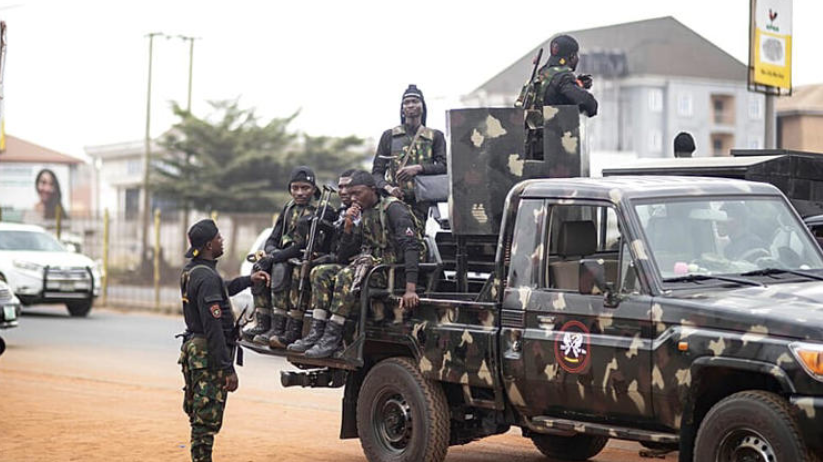
Dans un registre différent mais tout aussi crucial, Abuja cherche à consolider ses alliances pour faire face à ses « nombreux défis sécuritaires ». Le 17 décembre, le chef d’état-major des forces armées nigérianes, le général Olufemi Oluyede, recevait à Abuja l’ambassadeur de l’UE, Gautier Mignot.
Ce dernier a réaffirmé « l’intention de l’UE de soutenir le Nigeria pour surmonter ses problèmes de sécurité », selon un communiqué des forces armées publié sur X. Les deux parties évoluent « vers un renforcement accru de leurs liens existants en améliorant l’interaction dans le domaine de la défense ». Un soutien qui, selon M. Mignot, s’étendra également aux domaines de la gouvernance et de la politique.
Le général Oluyede a, de son côté, pressé l’UE d’accélérer le processus d’aide, signe de l’acuité de la situation. Le Nigeria, en première ligne contre Boko Haram et sa faction dissidente, l’État islamique en Afrique de l’Ouest (ISWAP), se bat pour le contrôle de zones stratégiques comme le bassin du lac Tchad. L’UE apporte déjà son concours via des programmes de consolidation de la paix et de réintégration d’anciens combattants, y compris des terroristes repentis.
La décision sur le bois marque un tournant dans la gestion environnementale du géant africain, longtemps miné par une exploitation non durable. Le partenariat renforcé avec Bruxelles, quant à lui, souligne la dimension régionale et internationale de la lutte contre le terrorisme dans le Sahel. L’efficacité de ces mesures, écologique et militaire, sera scrutée de près dans les mois à venir par une population en attente de résultats tangibles.
Nigeria’s Dual Sovereignty Push: Government Bans Timber Exports Amid Deforestation Crisis, Bolsters EU Security Ties
Nigeria acts to protect its dwindling forests with an immediate export ban, while deepening strategic cooperation with the European Union to combat terrorism.
In a series of strategic moves highlighting the country’s internal and geopolitical challenges, Nigeria has taken two major steps this week. On one front, an immediate and total ban on the export of timber and its derived products has been decreed to stem the haemorrhage of its forest resources. On another, Abuja and the European Union have formalised a substantial strengthening of their defence and security cooperation in the face of the persistent threat from terrorist groups.
« The continued export of timber and derived products threatens long-term environmental health. » With these words, Nigerian Environment Minister Balarabe Abbas Lawal justified a radical decision. According to a statement reported by Premium Times, the ban is effective immediately, and all previously issued logging and export permits are cancelled.
The minister pointed to illegal logging and a lack of regulation as the main culprits behind the degradation of Nigeria’s ecosystem. The figures, chilling, confirm the urgency: between 2001 and 2022, the country’s most forested regions lost nearly 11% of their tree cover. This drastic measure aims to preserve what remains of this vital natural heritage, essential for biodiversity and the fight against climate change.
In a different but equally crucial register, Abuja is seeking to consolidate its alliances to address its « many security challenges. » On December 17, the Chief of Defence Staff of the Nigerian Armed Forces, General Olufemi Oluyede, hosted the EU Ambassador, Gautier Mignot, in Abuja.
The latter reaffirmed « the EU’s intention to support Nigeria in overcoming its security problems, » according to a statement from the armed forces published on X. The two parties are moving « towards a further strengthening of their existing ties by improving interaction in the defence field. » Support that, according to Mr. Mignot, will also extend to the areas of governance and policy.
General Oluyede, for his part, urged the EU to speed up the aid process, a sign of the severity of the situation. Nigeria, on the front line against Boko Haram and its dissident faction, the Islamic State in West Africa Province (ISWAP), is fighting for control of strategic areas like the Lake Chad basin. The EU is already providing support through peacebuilding and reintegration programmes for former combatants, including repentant terrorists.
These two announcements, though distinct, outline the same priority: Nigeria’s sovereignty and resilience. Faced with the depletion of its natural resources and persistent destabilising security threats, the federal government is attempting to regain control, through the law at home and through diplomacy abroad.
The timber decision marks a turning point in the environmental management of the African giant, long undermined by unsustainable exploitation. The strengthened partnership with Brussels, meanwhile, underscores the regional and international dimension of the fight against terrorism in the Sahel. The effectiveness of these measures, both ecological and military, will be closely watched in the coming months by a population awaiting tangible results.
Nigeria, exportation bois interdiction, déforestation Nigeria, Balarabe Abbas Lawal, Union européenne Nigeria sécurité, coopération défense UE Nigeria, Boko Haram, État islamique Afrique de l’Ouest (ISWAP), sécurité Lagos Tchad, environnement Nigeria, ressources forestières, terrorisme Sahel, Premium Times, gouvernement nigérian, géopolitique Afrique
Moussa Nassourou
À propos de l'auteur